
SEO vs Google Ads: Which Should your Allied Health Practice Use
- Maria
The Real Difference (and Why It Matters)
Your to-do list contains “learn Google Ads” or “work on my website SEO”…which you’ll get to right after you figure out what SEO means.
Both of these terms are ways to get found by families who are searching; they just go about it in different ways.
Google Ads are straightforward: you pay for each click (pay-per-click). You set up an ad pointing to the relevant page on your site, and you get traffic immediately. The trade-off is the cost.
SEO, conversely, is a set of tactics that gradually push your website further and further to the top of the rankings. There’s no cost per click, but it takes longer. Traffic typically starts to grow around the three to six month mark.
So the real question is not which one is better but rather which one fits your needs right now.
The Cost Reality
Regardless of whether you’re going to run ads or build out SEO, one thing doesn’t change: your website needs to include and maintain good content.
With Google Ads, you set a daily or monthly budget within the platform. Your targeting choices will directly affect how quickly that threshold is hit. Highly popular terms cost more and use up the budget fast, whereas longer, more complex phrases cost less.
SEO has a slower payoff, but once in motion, there isn’t a per-click drain on your budget.
Timeline Expectations
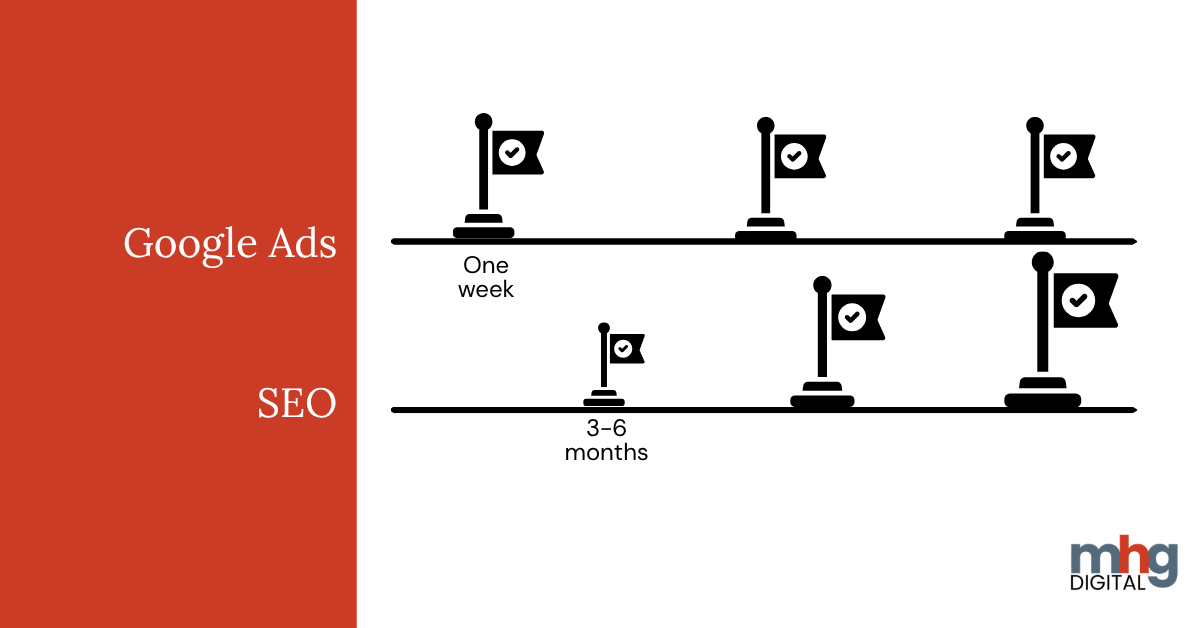
Once submitted and approved by Google, your ad can be live within twenty-four hours (or sooner). You get traffic right away.
Meaningful shifts in traffic to your site will start around the three to six month mark for SEO. As a bonus, there’s no additional cost once it’s rolling.
Google Ads Make Sense When...
Google Ads makes sense when you have a special event. Workshops, a masterclass, or a limited-time offer. You don’t have months to wait for signups, and you need to fill spots by a certain date. When you need predictable traffic now, ads are your best choice.
Running ads for an event also presents a hidden opportunity that many may fail to take advantage of. This is an ideal moment to test out messaging for your practice and see what works and what doesn’t before you invest in SEO. See what resonates and use those insights when building out your SEO strategy.
SEO Makes Sense When...
Your practice still needs to be discovered beyond event season. It needs to be findable years from now, and you don’t want to be paying for traffic years from now. Building a website that creates a “home base” that contains your practice info, service offerings, and a blog that answers common questions your families will have positions you as a knowledge source within your niche. Google rewards sites with regular, helpful content with higher rankings. For allied health practitioners, that means answering a question families actually have—about therapy, sensory needs, developmental milestones, or whatever your niche is. That’s what moves you up in the rankings.
The Content Foundation Both Need
Both Google Ads and SEO fail if your website has weak content. An ad bringing families to a poorly written page is wasted money. SEO ranking you high means nothing if users bounce because they can’t find what they need.
For an allied health practitioner, good content means clarity: families understand who you help and what you do and are able to find answers to some commonly asked questions from reading your site.
Before you spend money on ads, time on SEO, or both, invest in your website copy first. It’s the foundation both strategies are built from.
Decision Framework: Ask yourself These Questions

Timeline:
- When do you need results?
- Do you have an event, workshop, or launch coming up in the next 1-3 months? If yes, ads can get you traffic fast. If you’re building long-term, SEO is the play.
Budget:
- What can you spend? Google Ads requires an active monthly spend. SEO requires time (yours or hired help). Which resource do you have more of right now: money or time?
Content:
- Is your website ready? Before running ads or building SEO, ask: Is my site copy clear? Can families understand what I do and how to work with me? If the answer is no, fix that first.
Goal:
- What are you actually trying to accomplish?
Are you filling a specific need right now (event or promotion)? Or building steady, consistent discovery over time? Your answer determines which strategy makes sense.
If SEO feels like the right move, I work with allied health practitioners to build strategies that stick. Want to explore what’s possible for your practice? Run a speech practice? Here’s what SEO for SLP practices looks like with me.